The Irish Bouzouki
The bouzouki came to folk music by an unlikely road — from the tavernas of Greece into the Irish session of the 1960s, flattened in the back and re-strung for the tune. Today it is the beating heart of the accompanist's craft.
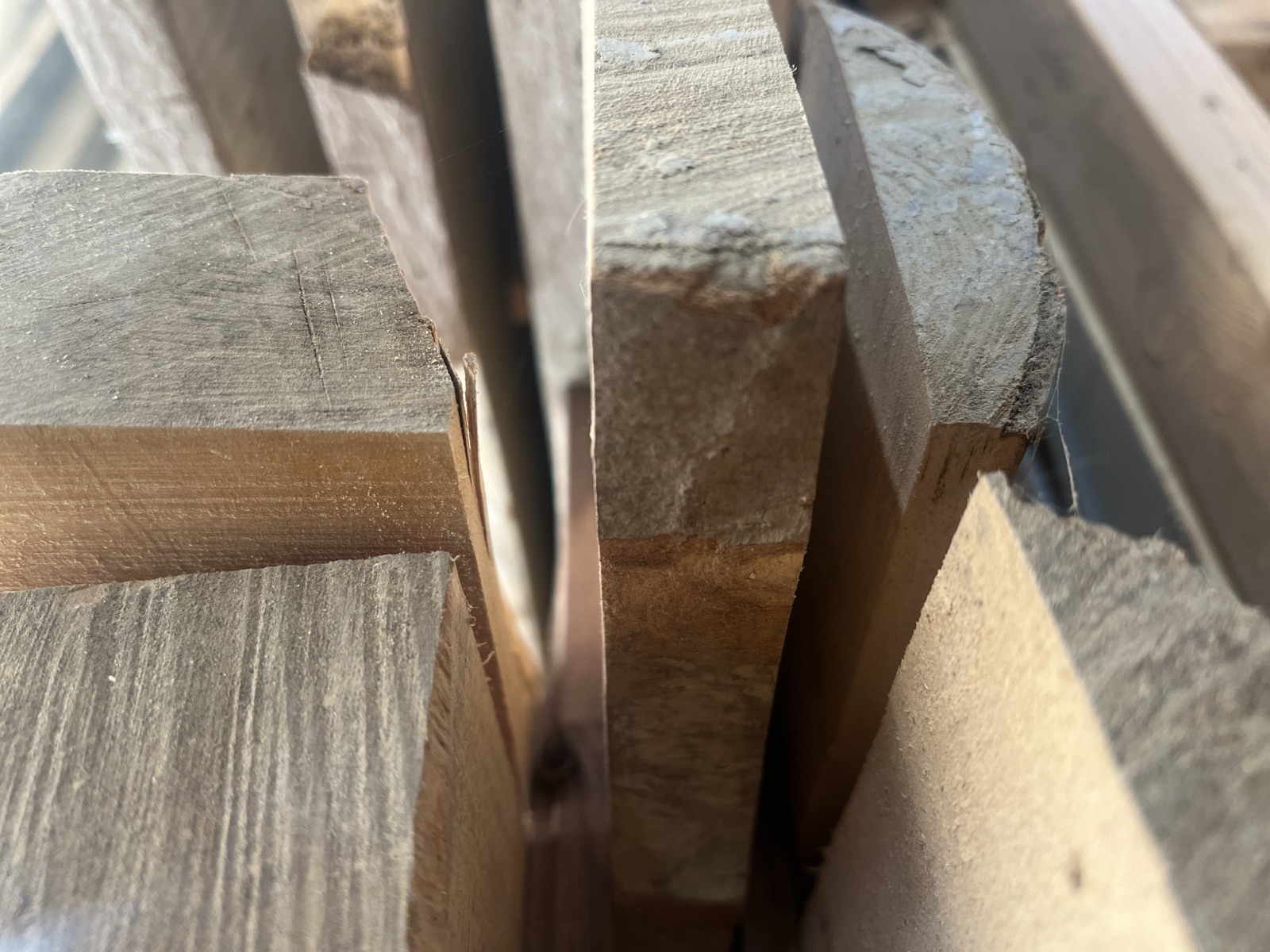
Richie builds the flat-backed Irish bouzouki — and its cousins the cittern and the octave mandola — in Welsh sycamore, back and sides, with an Englemann spruce soundboard and an African-blackwood fingerboard: a body deep enough to carry, a scale long enough to ring, and a voice tuned for rhythm and drone beneath a melody.
It is an instrument for the player who holds the room together.
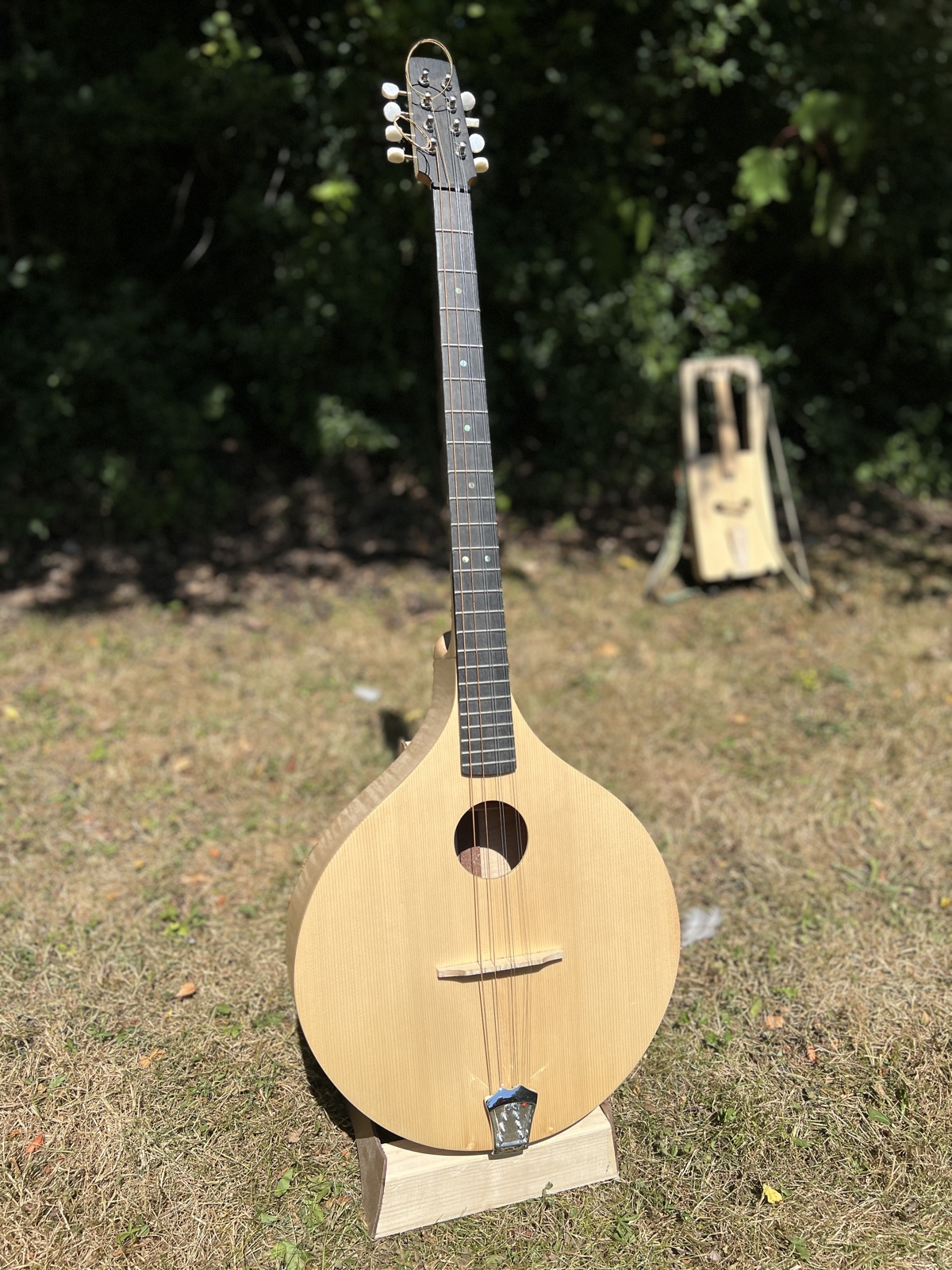
Long scale, deep voice.
The flat back and sides are Welsh sycamore; the soundboard is Englemann spruce, lightly braced for a bright, sustaining tone. Scale lengths run long — for the ring and tension the tuning asks for.
Four courses as standard, five to order; tuned GDAD, GDAE, or as you play. Fitted with geared tuners, an African-blackwood fingerboard and bone nut, and set up to your hand.
A bouzouki, cittern, or octave mandola is usually four to six months at the bench.
To follow the session further.
The bouzouki belongs to the accompanist — the player who holds the room together. A few places to find the tunes, the talk, and the sessions themselves.
- The Session
The great gathering-place of Celtic traditional tunes — the raw material of every session a bouzouki was built to drive.
- Trac Cymru — sessions & tune clubs
A directory of real-world sessions across Wales — the rooms where an instrument like this earns its keep.
- Mudcat Café
A long-running forum of folk singers and players — good company for questions of tuning, technique, and where the bouzouki has travelled.