The old instruments of the bards, made to sing again.
Richard Stephenson builds the instruments of the bardic tradition to commission — the crwth, the ancient bowed lyre of the bards, of which he is one of only a handful of makers left in the world; the Celtic harp; and the mandolins and bouzoukis of the living session. Thirty years at the bench, working native timber by hand.
Or telephone +44 7958 616819
Two voices from one bench.
The old instruments of the bards — and, if you ask, a mandolin or an Irish bouzouki carried out on the same tide of work.
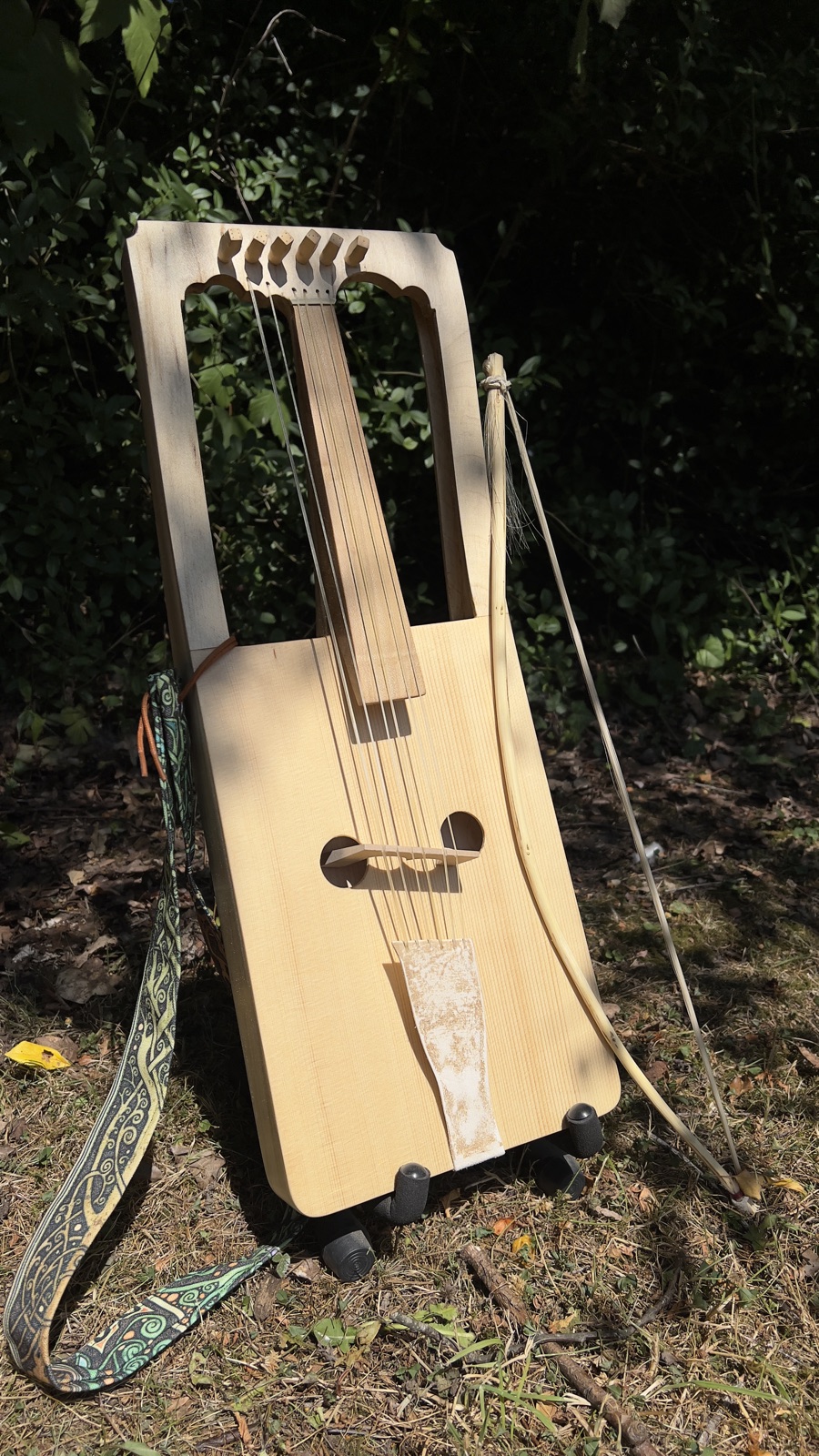
The Crwth
The lyre of the bards — six gut strings, four bowed and two drones. Older than the violin, and all but lost.
Read more →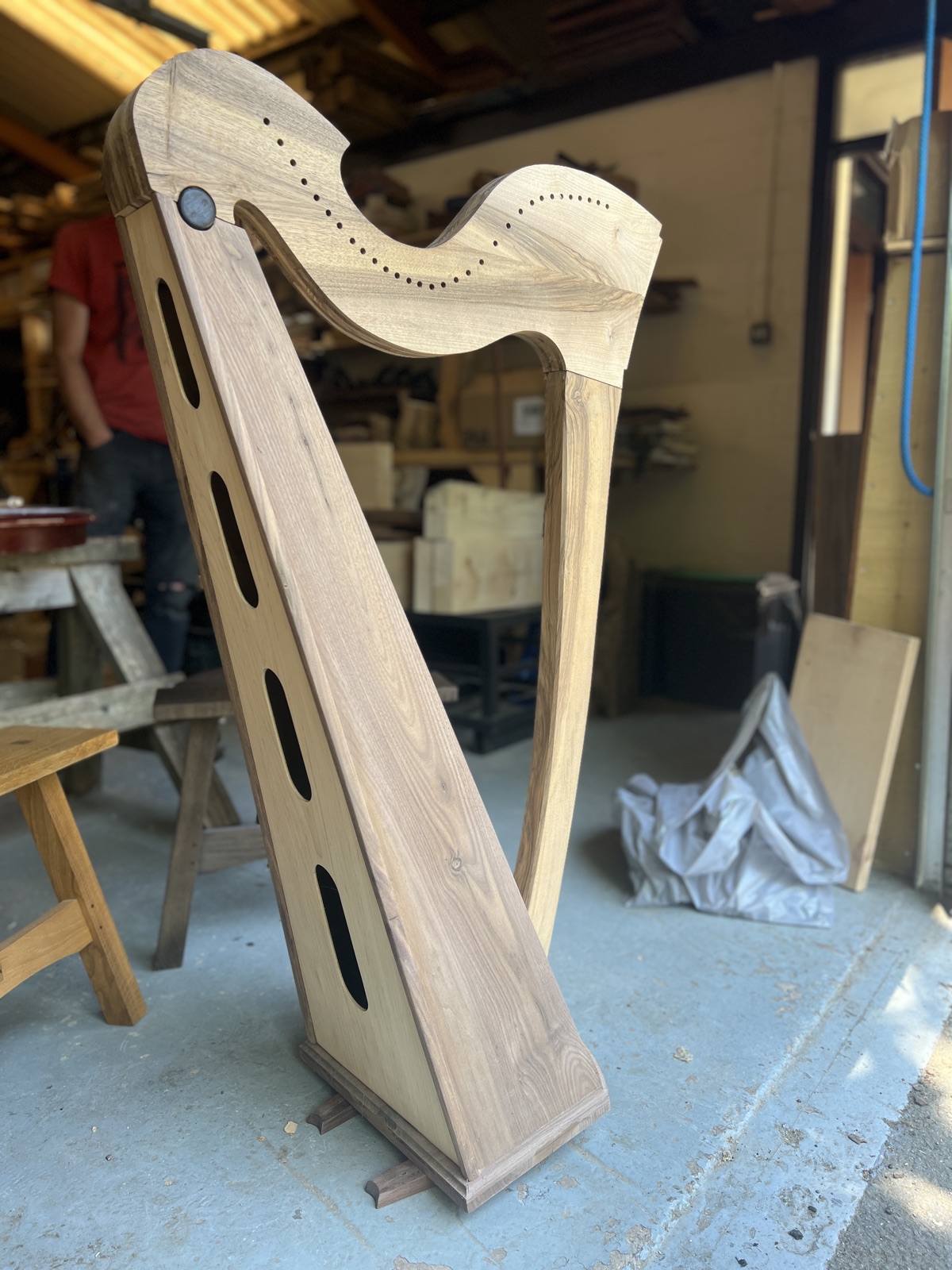
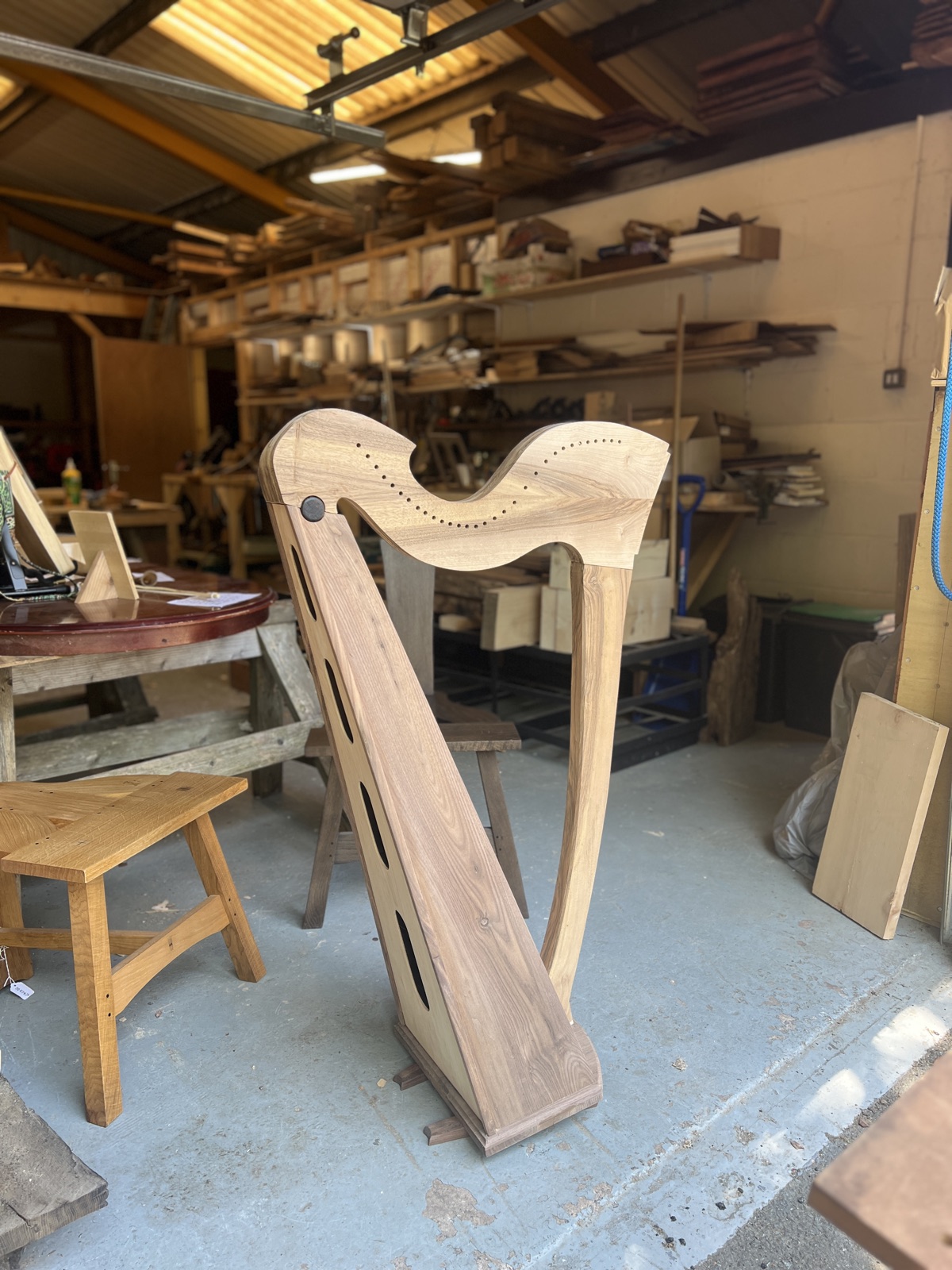
The Celtic Harp
The small harp of the bards — a single sweeping row of strings, with levers for the turns of key. Light to carry, and voiced for song.
Read more →Not only the old instruments.
Alongside the telyn and the crwth, Richie builds mandolins and Irish bouzoukis — stringed instruments of a later century, but made the same way, by the same hands, from the same well-read timber. A player who came for a harp has more than once left with a bouzouki on order as well.
What binds it all is not the instrument but the making — one at a time, by hand, in native timber, for a single player.
Recent notes from the bench.
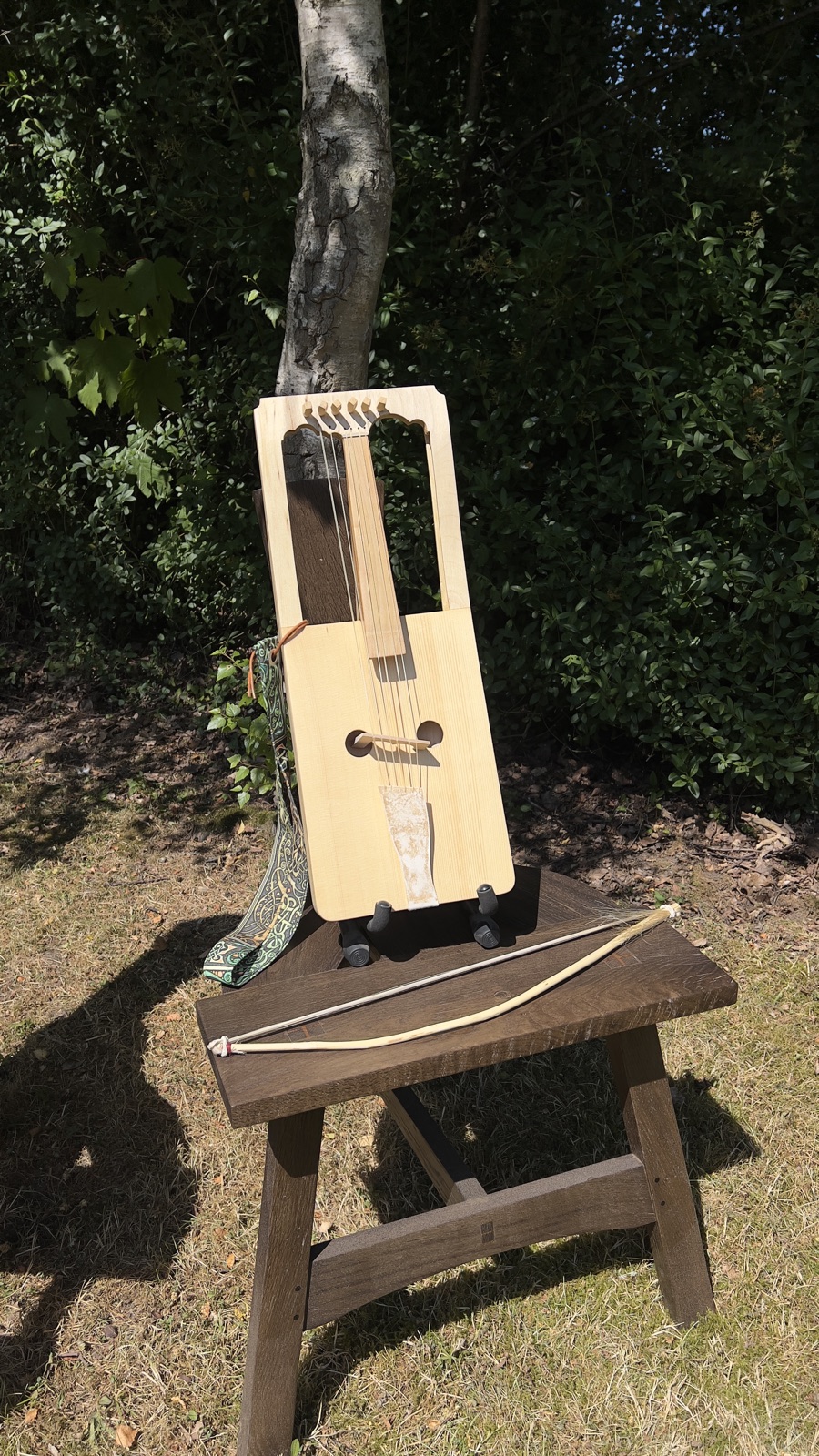
Against the old ones
There are only a handful of old crwths left to measure yourself against — and even they are not perfect.
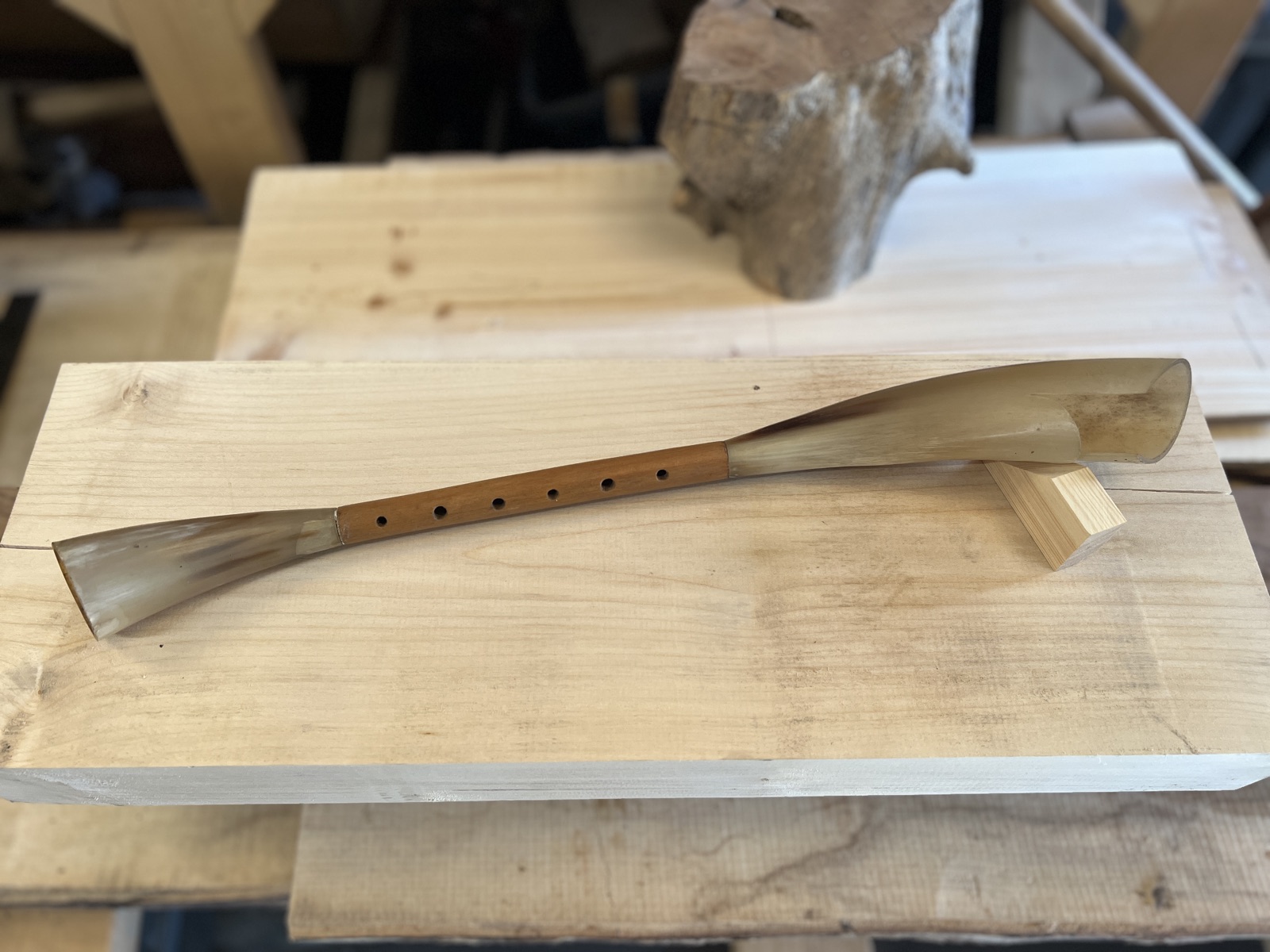
A pipe of elder and horn
Not everything on the bench has strings. The pibgorn is Wales's old hornpipe — a reed pipe with a horn at each end.
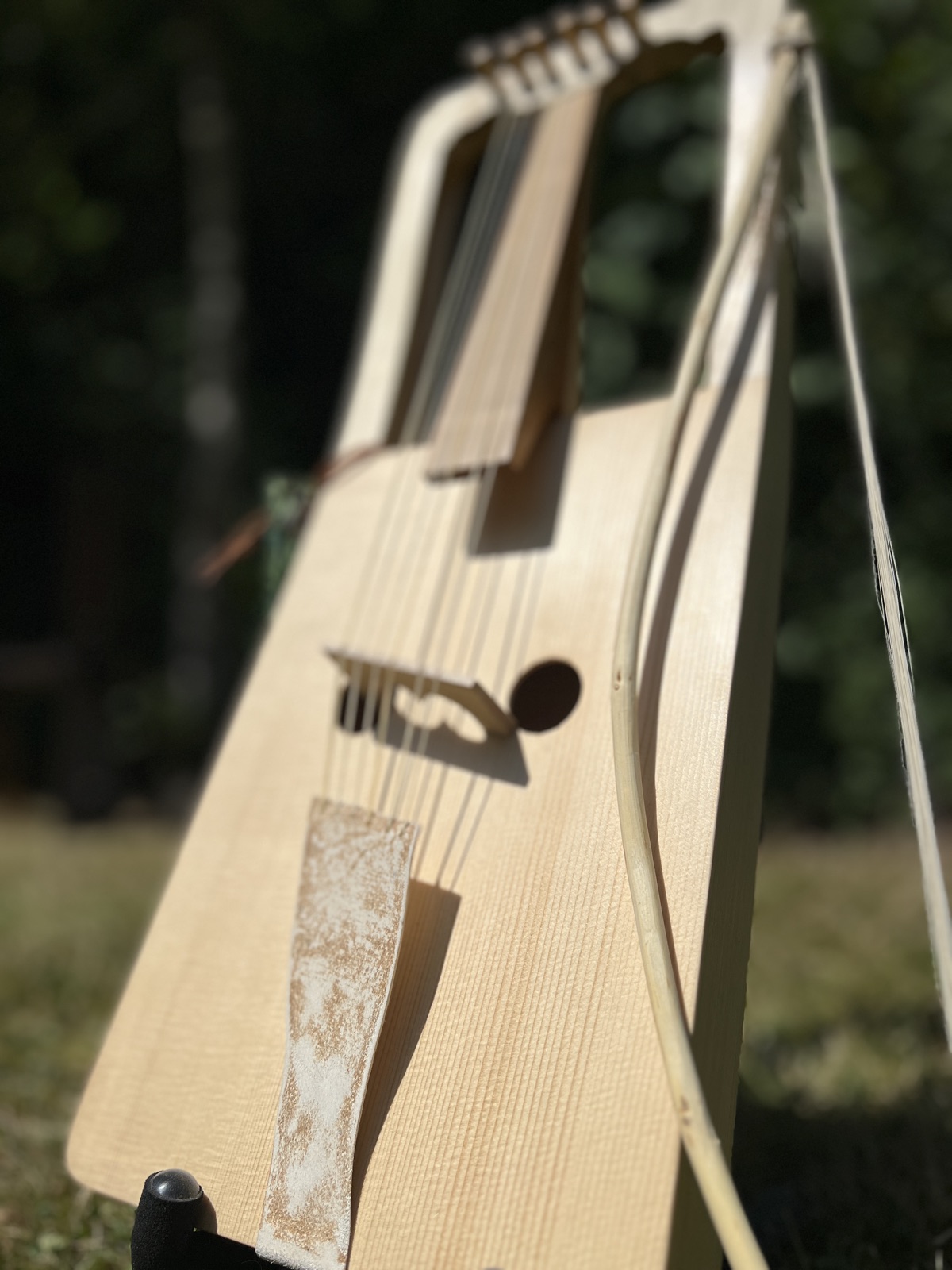
Four or five new players in the world
Three crwths on the bench at once — and a way of counting the work that has nothing to do with money.
A few instruments that have left the workshop.
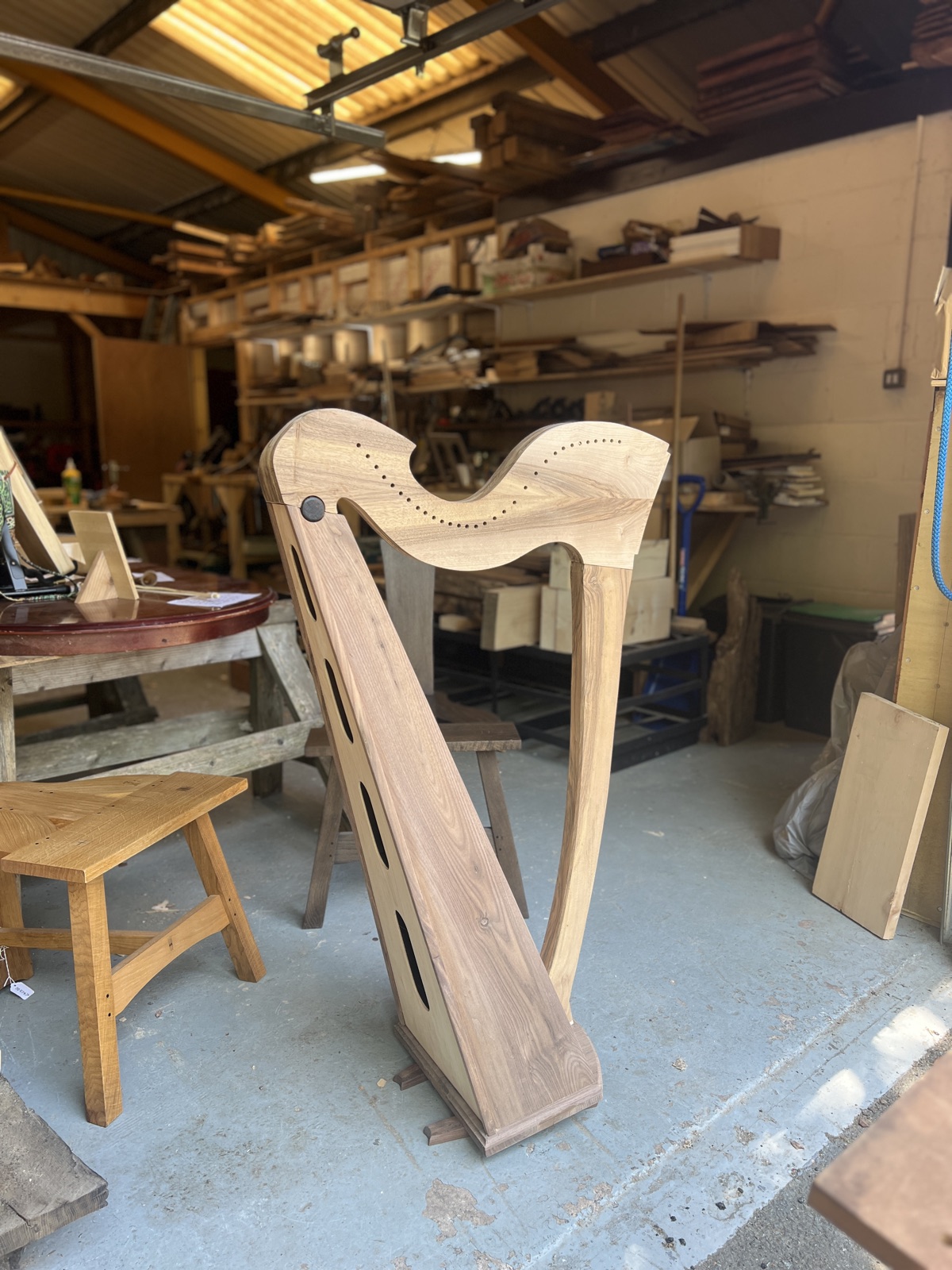
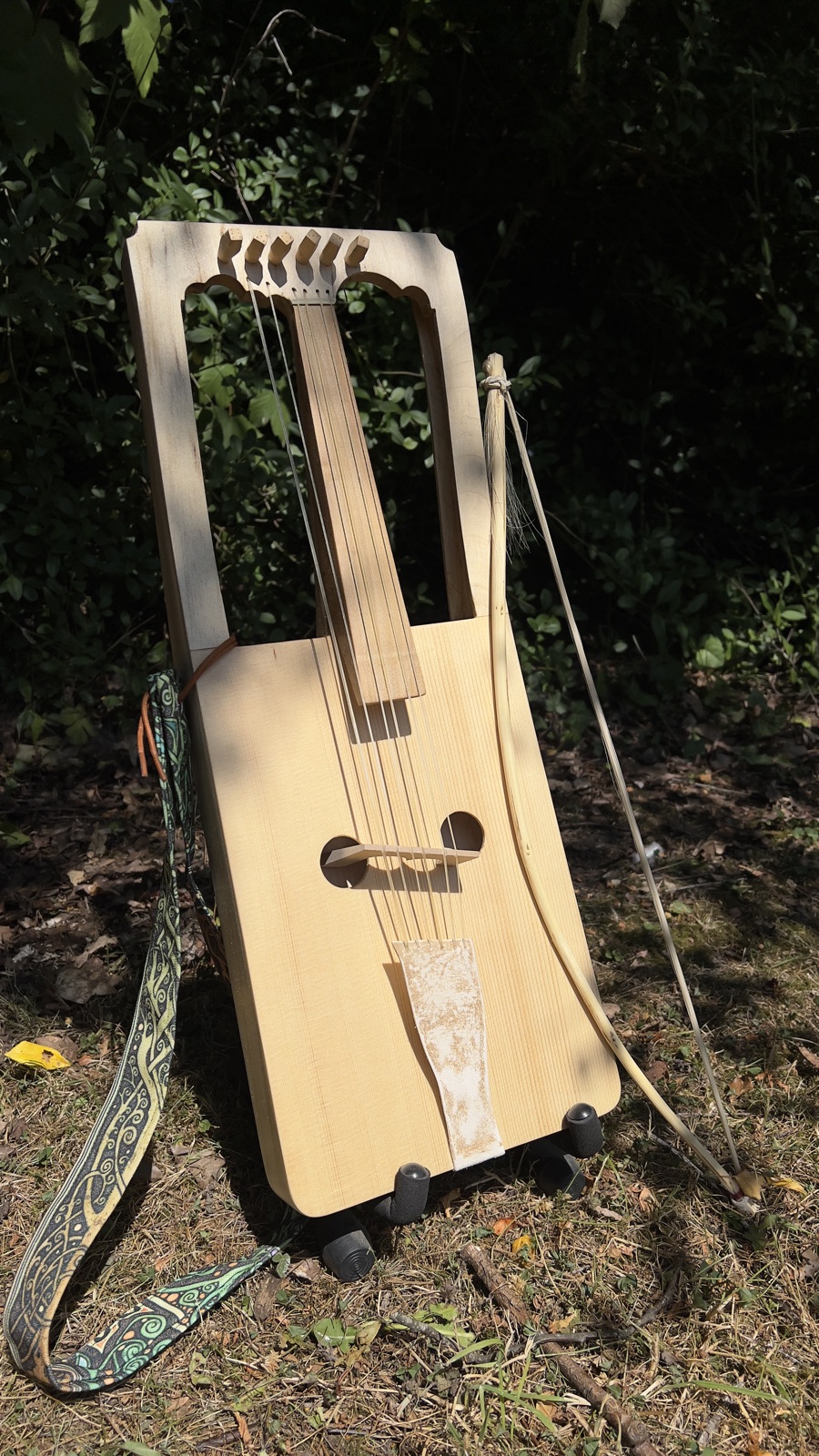
For centuries the harp and the crwth carried the poetry of the bards — the old art of cerdd dant, "the craft of the string," in which the voice and the instrument answered one another beneath the great houses of Wales. The instruments are quiet again now; the poetry keeps.