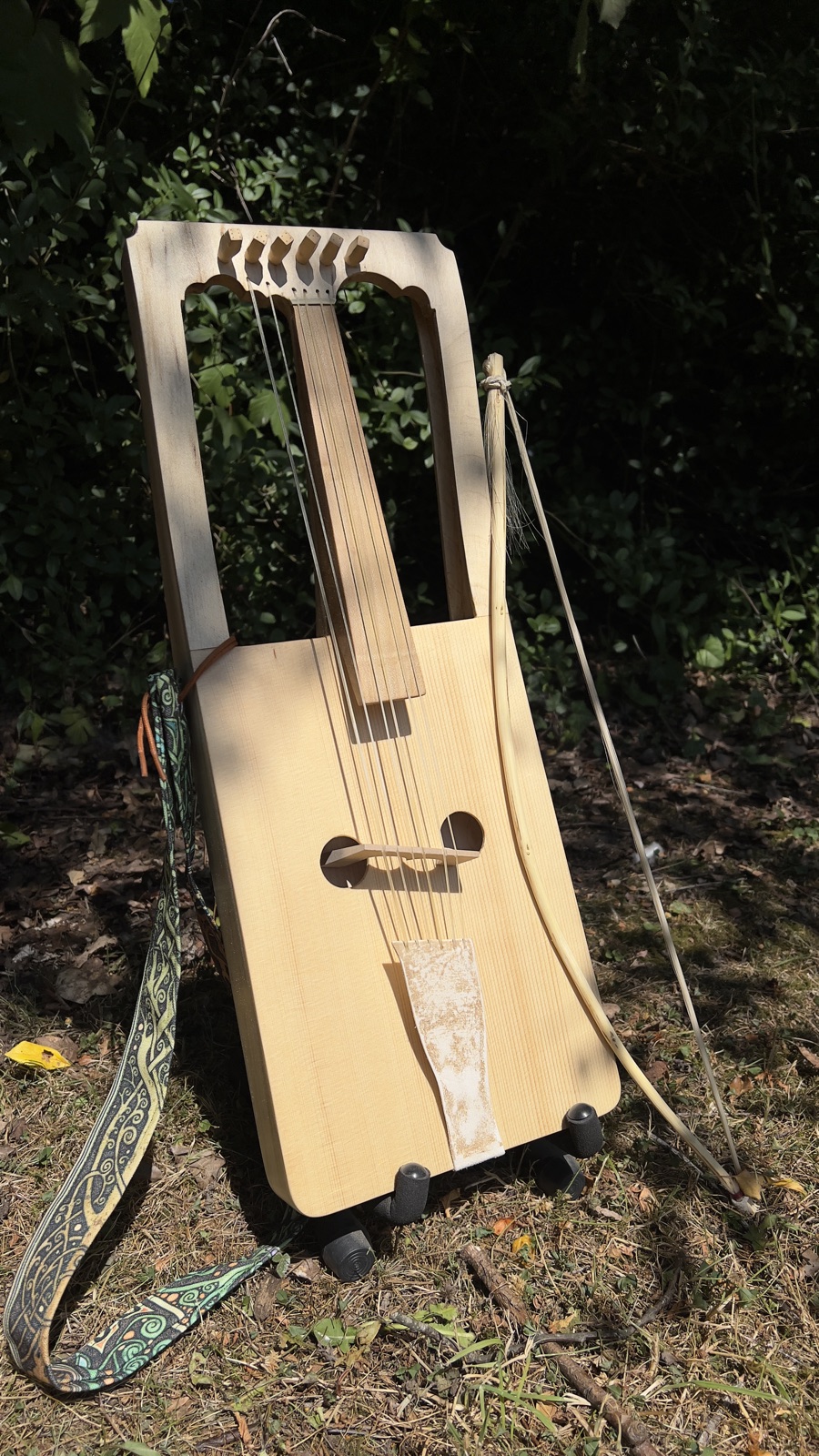
Y crwth
The Crwth
The lyre of the bards
Six gut strings — four bowed and two drones. Older than the violin, and by 1800 almost gone. Today, one of the world's rarest instruments to own.
Read more →Richie's bench is given first to the old instruments of the bards — the crwth, the Celtic harp, and the reedy pibgorn — but the same hands build for the living session too: the flat-back mandolin and the long-necked Irish bouzouki, and now and then an experiment like a Danish dance-fiddle. Each is made to commission, from native timber where he can find it, at the pace the wood asks for.
The lyre of the bards
Six gut strings — four bowed and two drones. Older than the violin, and by 1800 almost gone. Today, one of the world's rarest instruments to own.
Read more →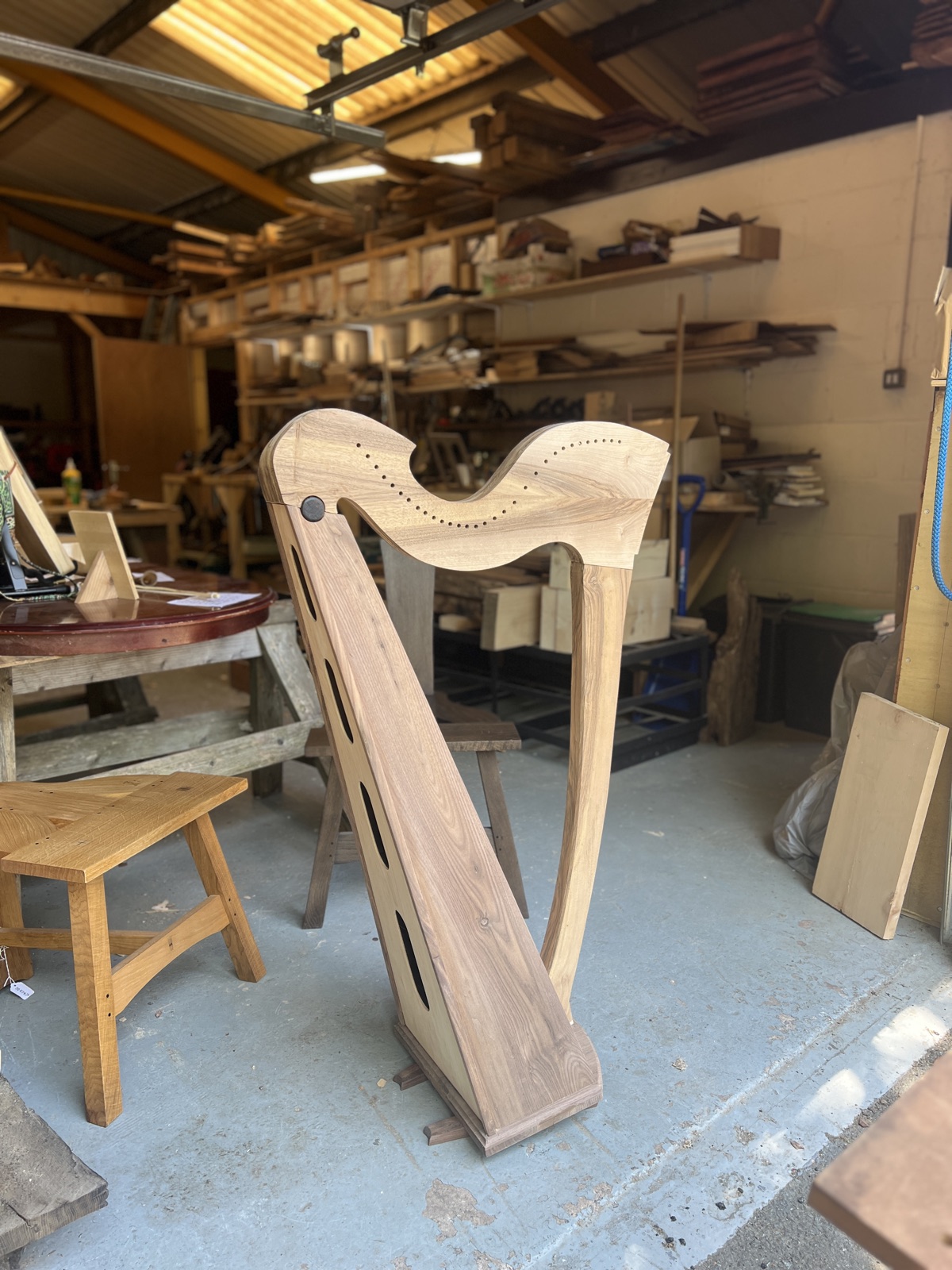
The harp of the bards
A single sweeping row of strings, with sharping levers for the turns of key — light to carry, and voiced for song, the old airs, and the accompanist's art.
Read more →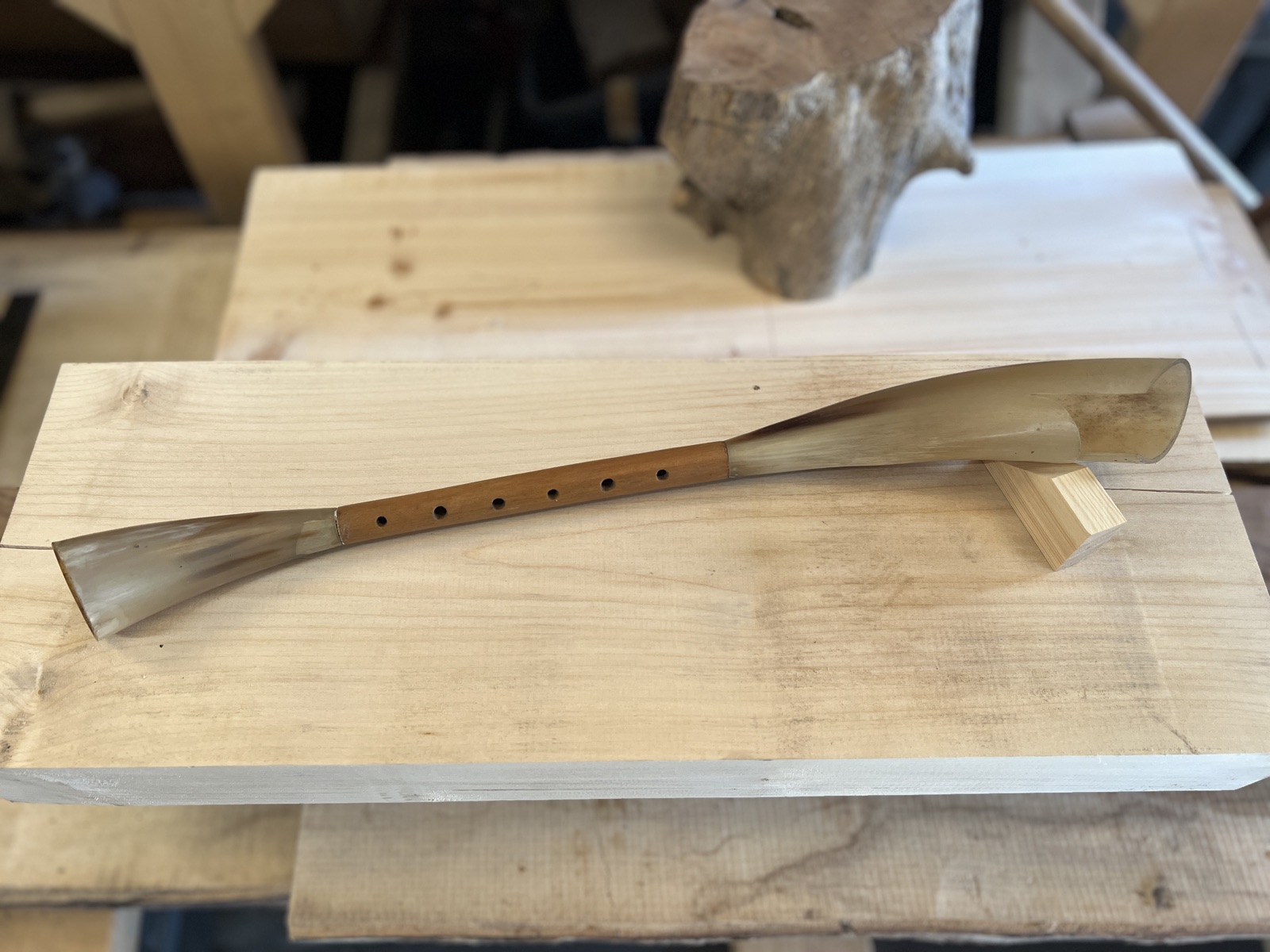
The Welsh hornpipe
Wales's old reed pipe — a length of elder bored for the fingers, a single reed, and a horn of cow at each end. A loud, carrying, open-air voice.
Read more →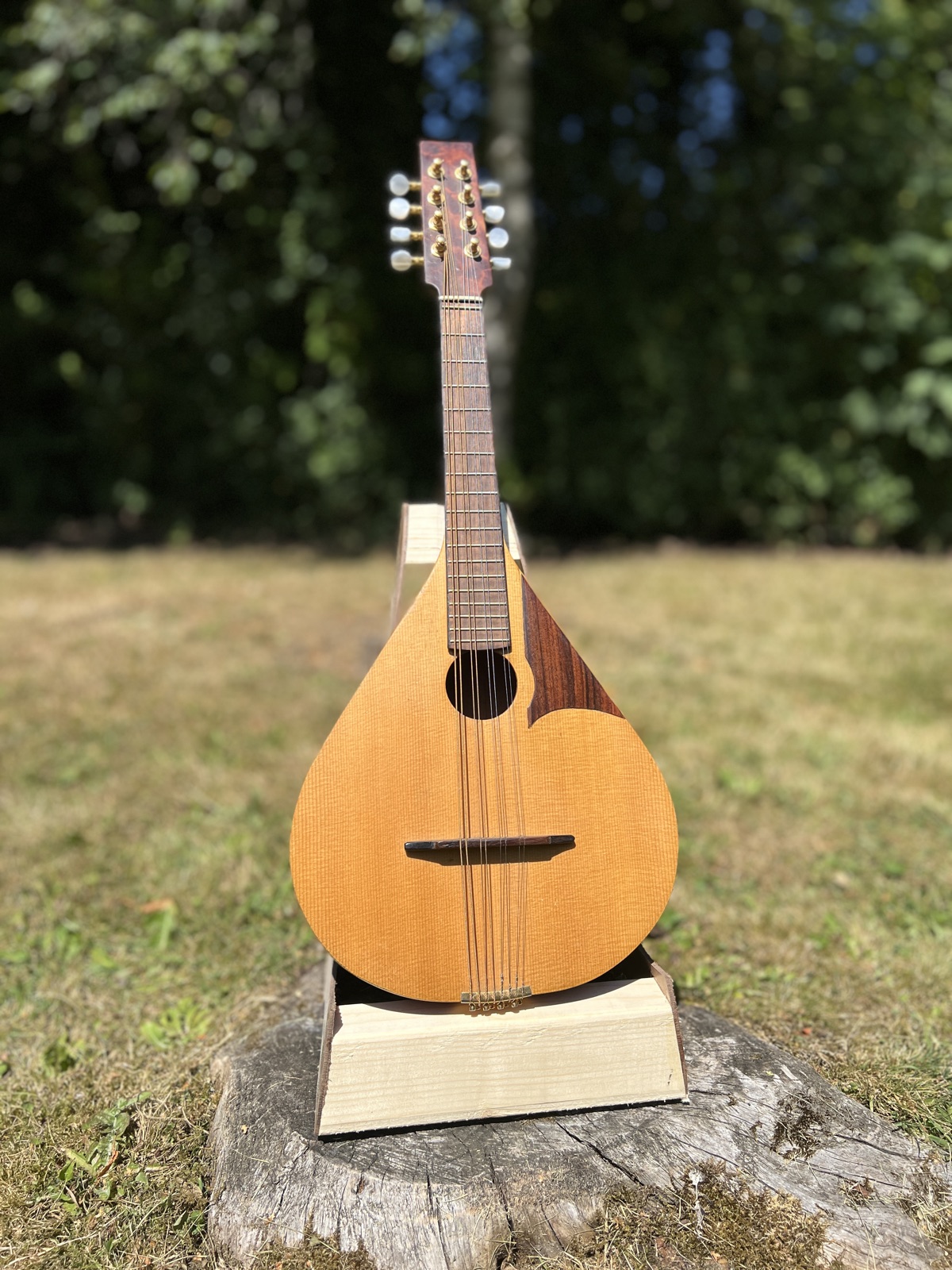
Carved and quick
A flat-back folk mandolin — eight bright strings over a Cornish-yew body and a Sitka-spruce top, built to the hand and voiced to cut cleanly through a session.
Read more →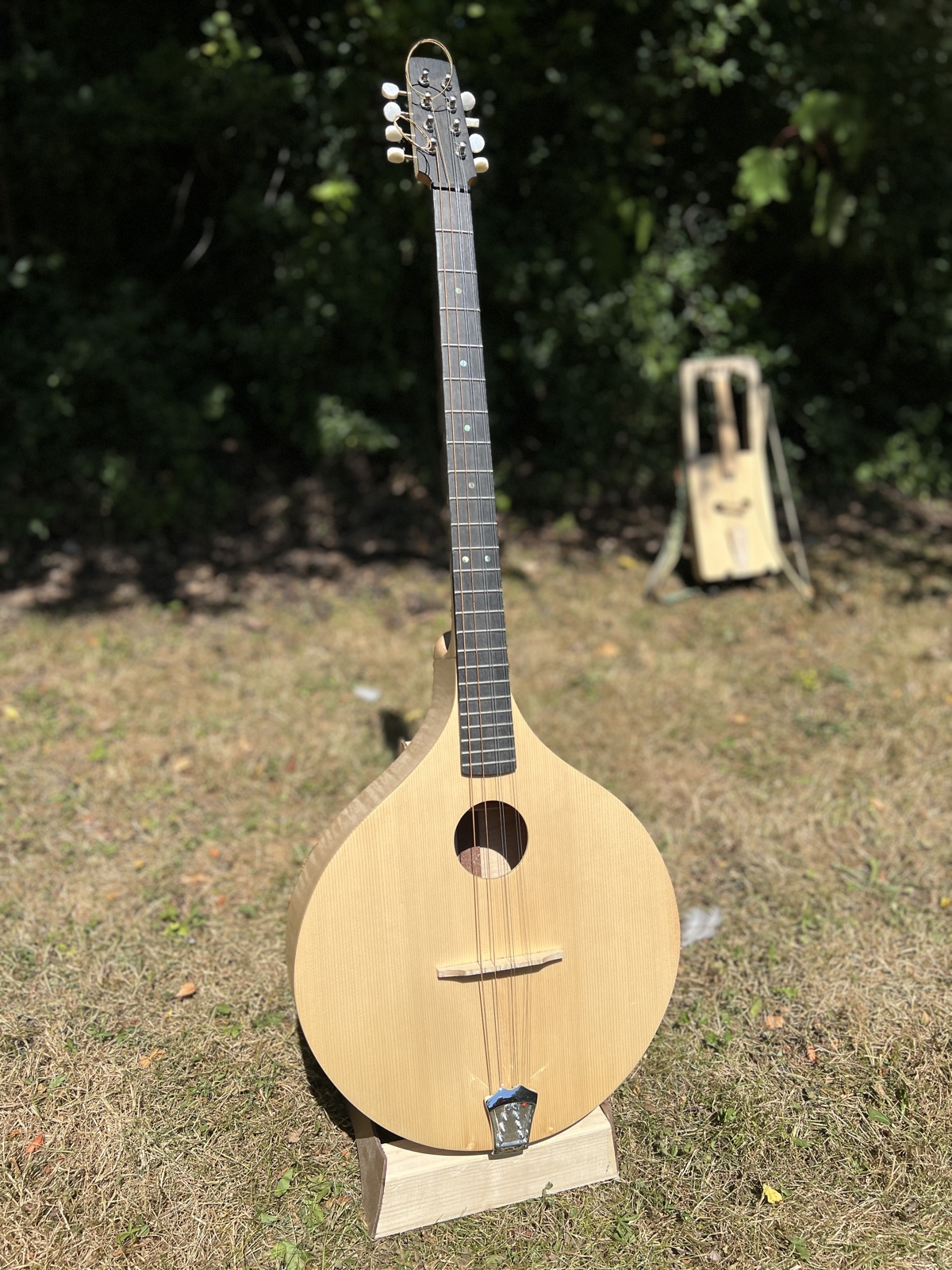
Greek by birth, Irish by adoption
The flat-backed Irish bouzouki, cittern and octave mandola — long-necked and ringing, tuned for rhythm and drone beneath the tune.
Read more →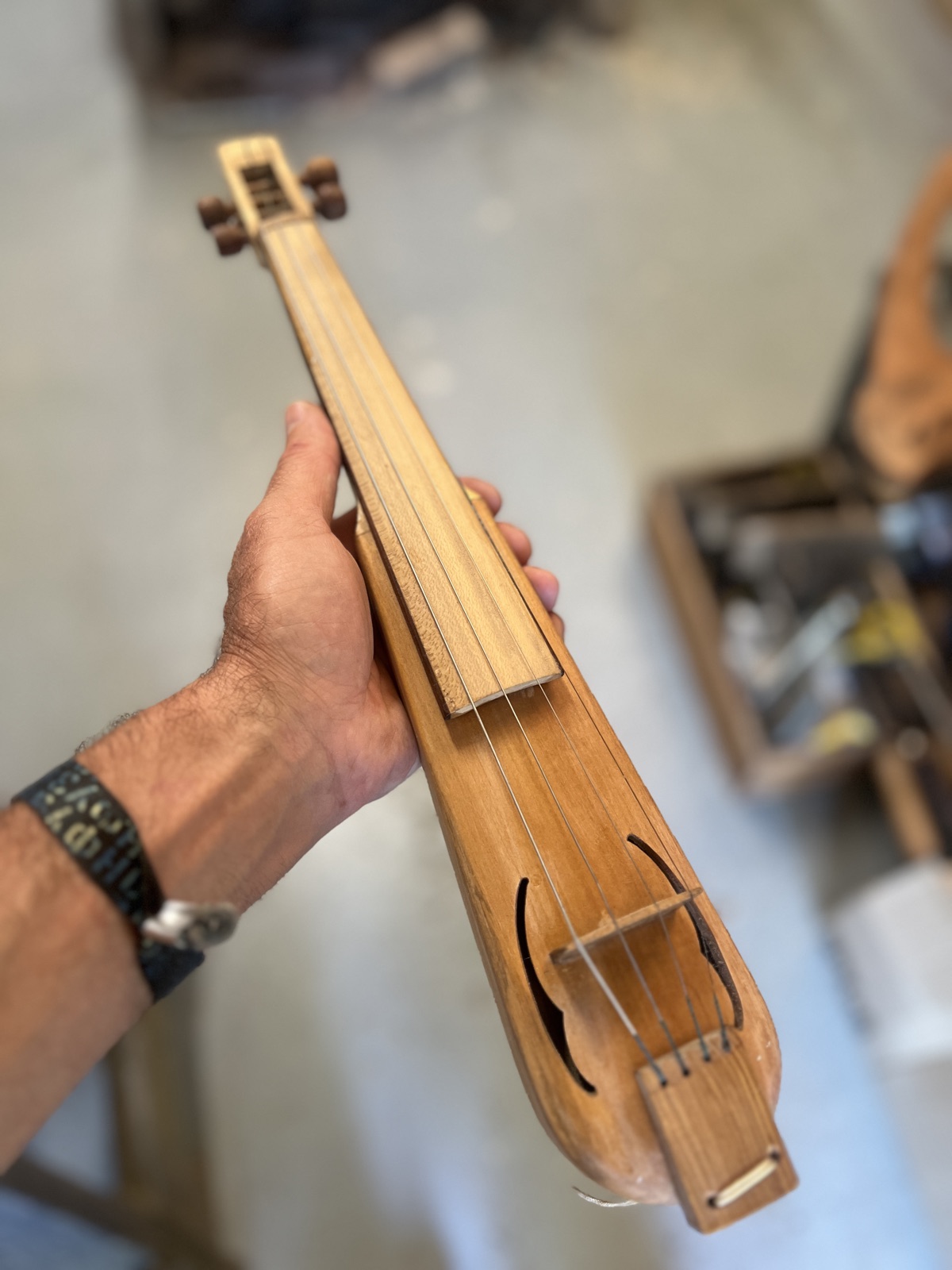
Carved from one piece
An occasional experiment — a small dance-fiddle after a sixteenth-century Danish pattern, carved from a single block like a crwth, with four strings and a bow.
Read more →A record of instruments that have left the workshop — each built for one player and one room, and none of them to be made again.
Welsh sycamore
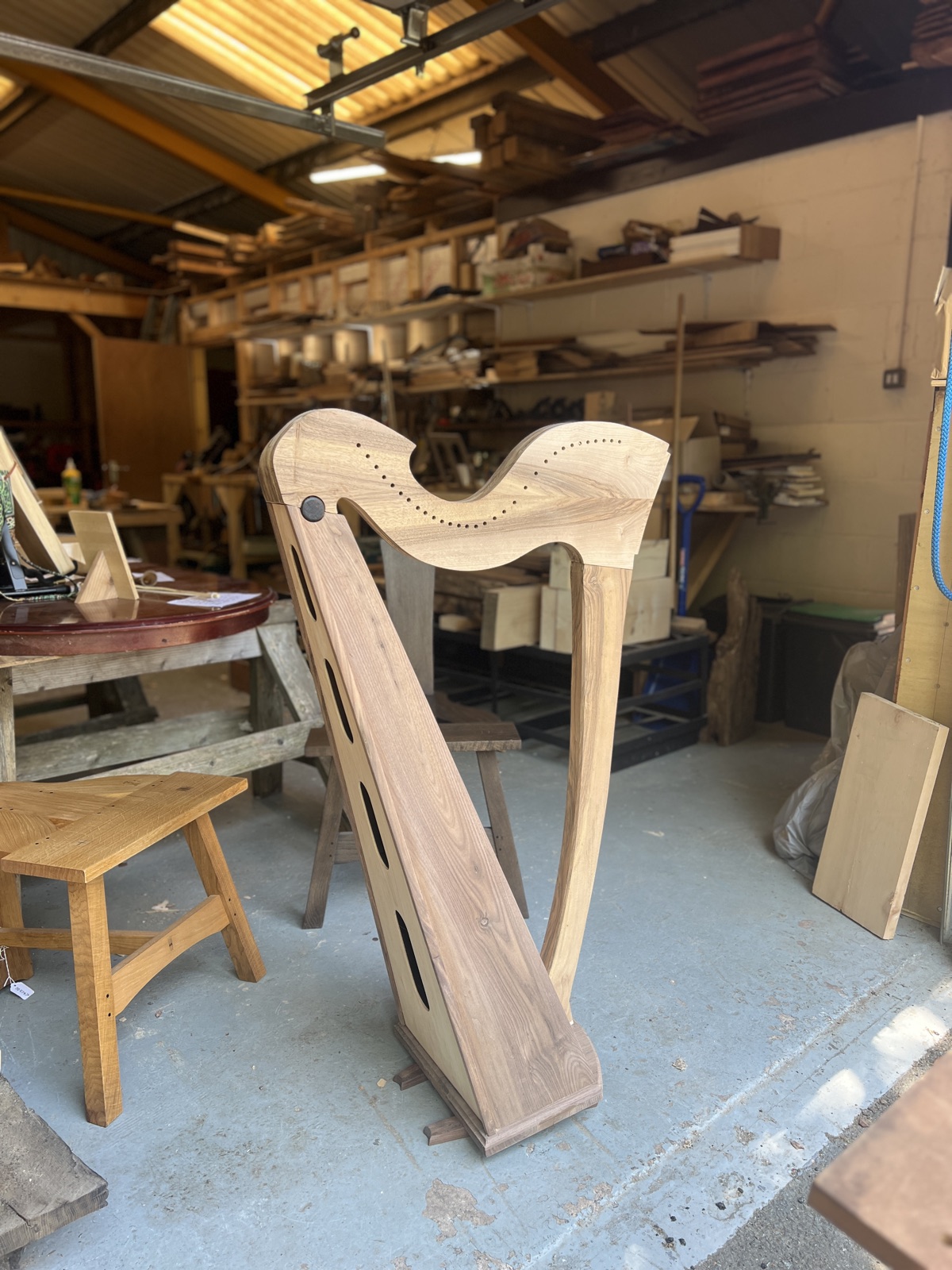
Thirty-four strings in a single sweeping row, with sharping levers for the turns of key. Sycamore throughout, voiced bright and clear for song and for the accompanist's art.
“Built for a singer of the old airs.”
Welsh sycamore & spruce
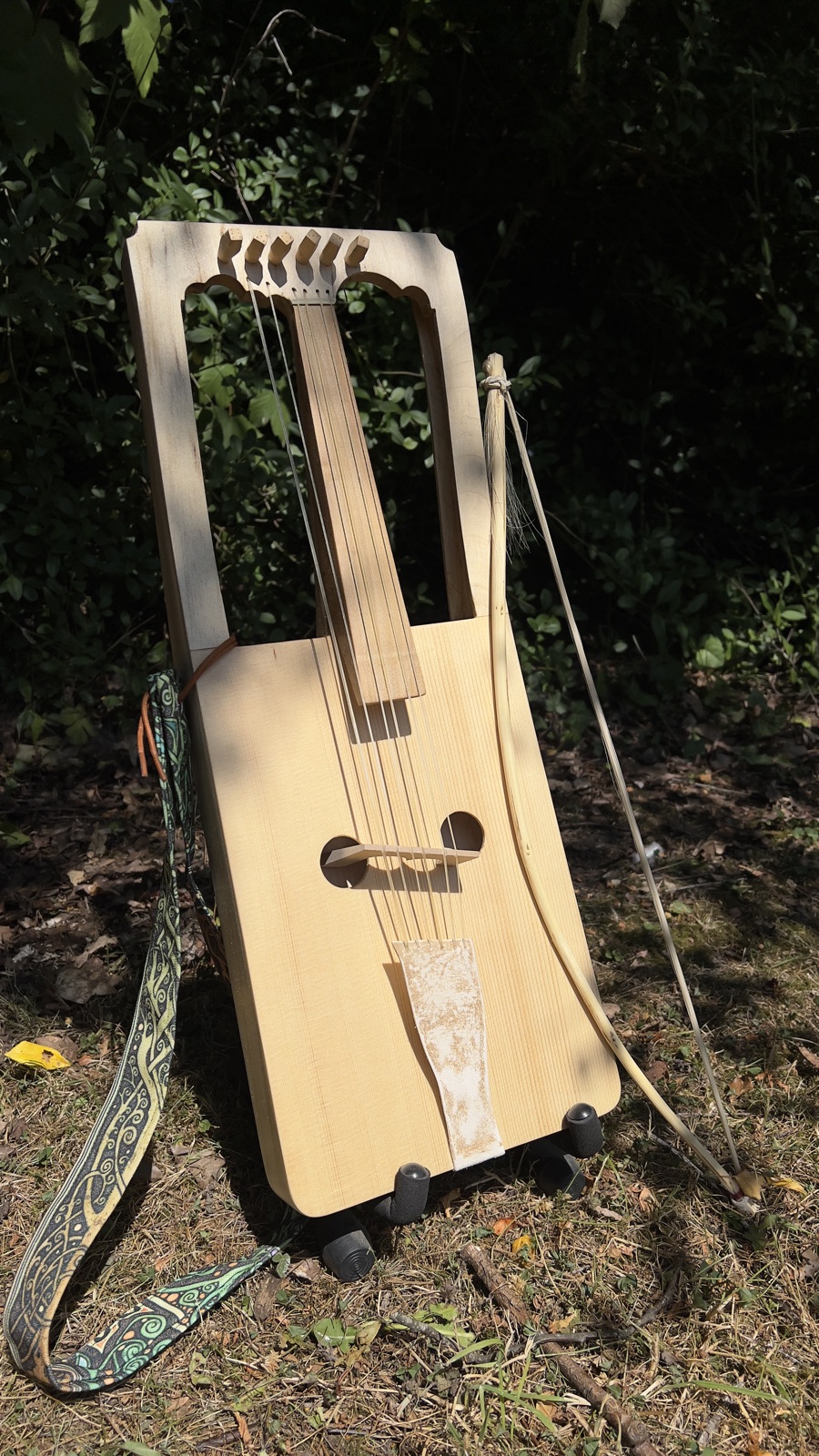
Careful copy of the Evans crwth held at St Fagans — six gut strings, four bowed and two drones, carved from a single block of Welsh sycamore with a spruce soundboard.
“A copy of the museum instrument.”
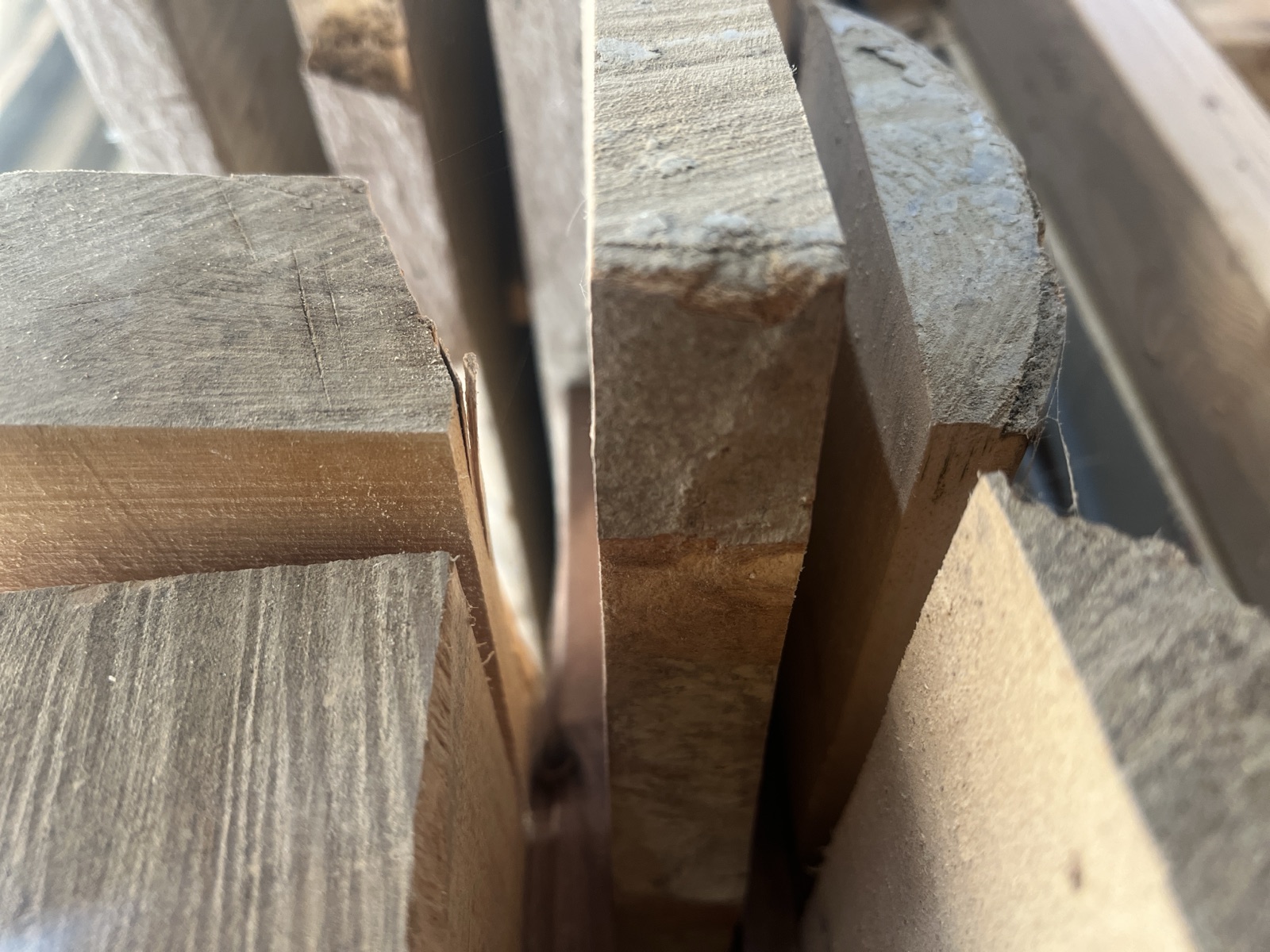
cherry
Thirty-four strings, Camac levers, cherry throughout — a lighter instrument for a smaller room, but voiced with the same care as its taller cousins.
“A smaller harp for a cottage window.”
What you see here is not a catalogue to choose from but a record of what has already left the bench — a way of knowing the work by its results. The timber differs each time, the hands that will play it differ, and so the voice differs too.
If one of them speaks to you, it is not that instrument you would be ordering, but its cousin: the same care, the same patience, the same native wood, shaped freshly for you. That conversation begins with a telephone call.
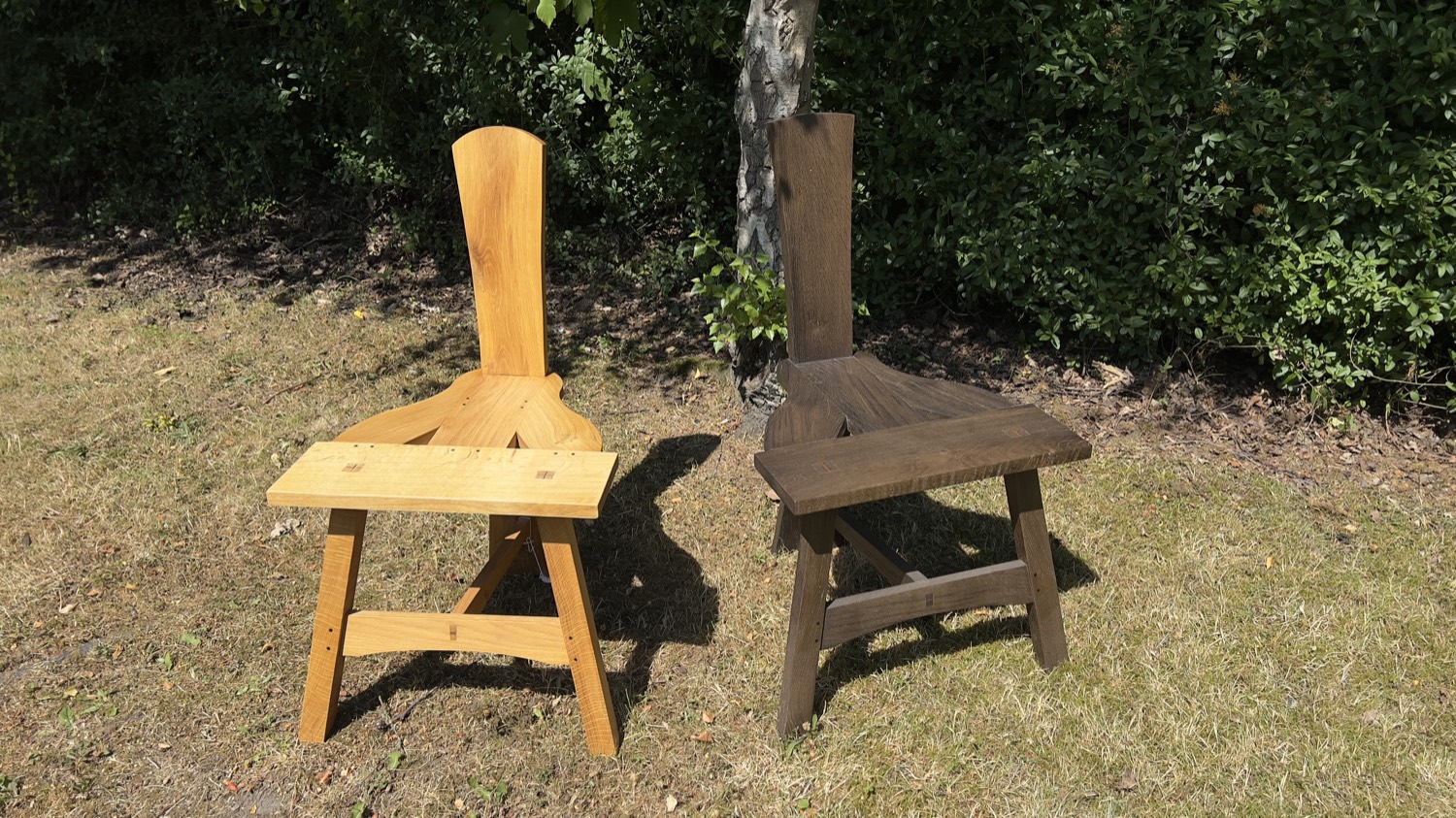
The same hands, and the same well-read timber, turn now and then to furniture. These are Sligo chairs, after a plain, strong pattern from the west of Ireland — one in seasoned oak, and one in bog oak dug from the Tanat valley, perhaps eight thousand years old.
If you have a piece in mind — a chair, a stool, something in a timber with a story — it is worth asking.