The Celtic Harp — telyn
The Celtic harp — telyn in Welsh — is the small harp of the bardic tradition: a single sweeping row of strings, light enough to be carried to the hearth and the session, and old enough to have kept the poetry of the bards across the Celtic lands.
Richie builds it as a folk and lever harp — commonly around thirty-four strings, strung in gut or nylon and fitted with sharping levers for the turns of key — carved and strung by hand, and voiced for song, for the old airs, and for the accompanist's art.
Each is made to commission for one player: shaped to the hand that will hold it, and to the music it is meant to carry.
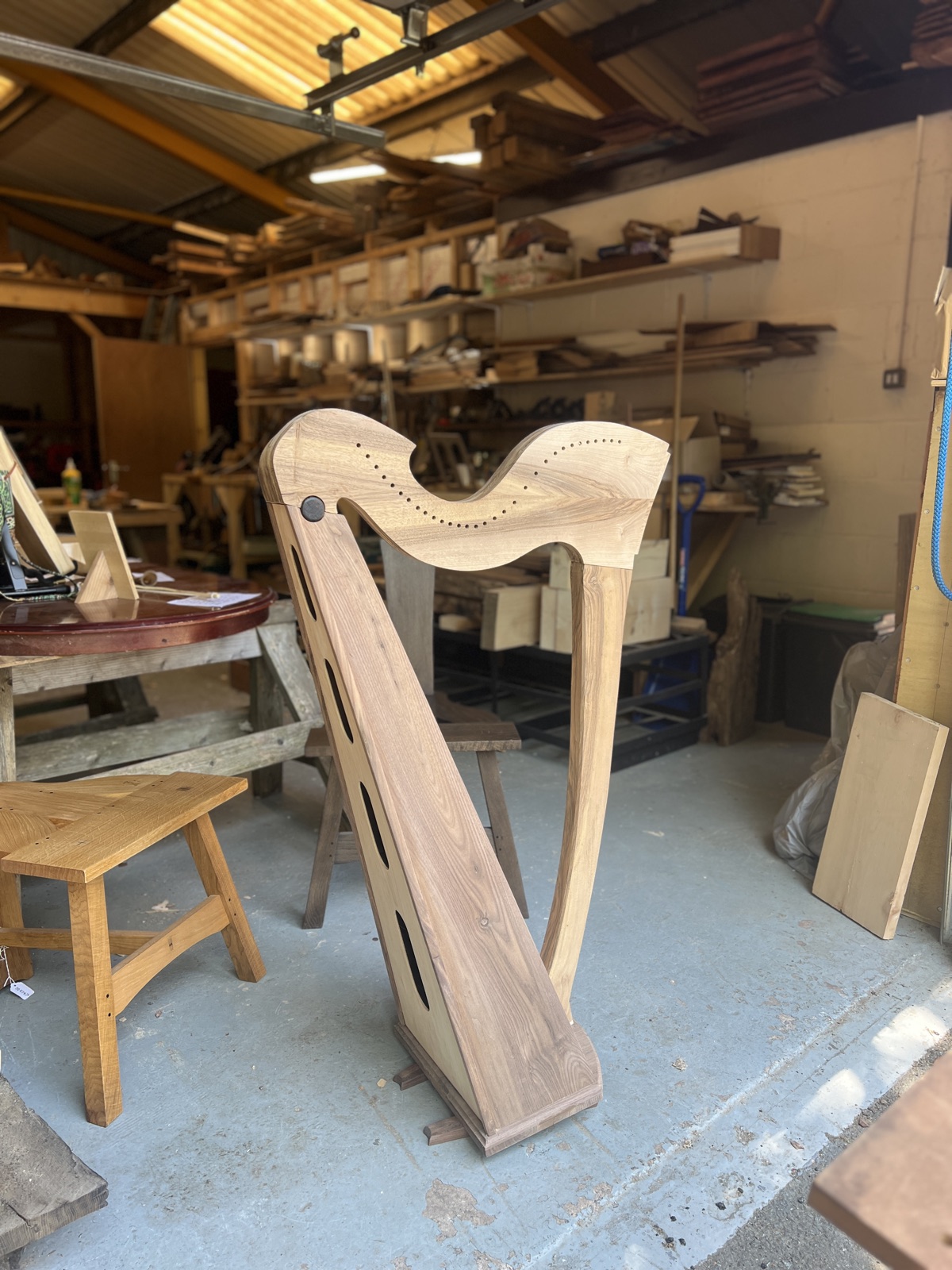
Folk and lever, made to carry.
The Celtic harp — a small, single-row harp, from a lap harp of twenty-two strings to a floor-standing folk harp of thirty-six, strung in gut or nylon to the player's taste. Suited to song, to small rooms, and to a player who wants to carry the instrument.
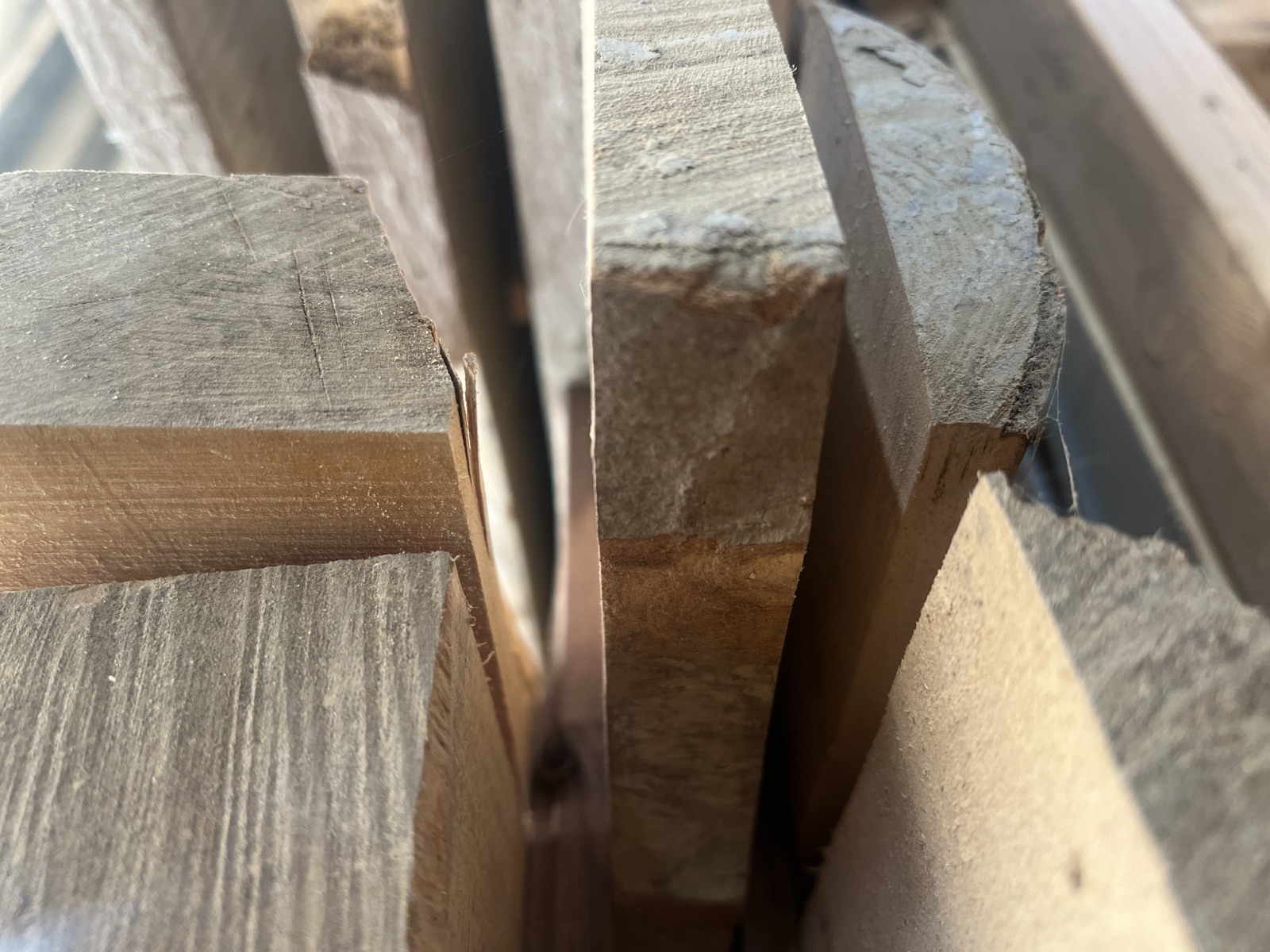
Levers & native timber — sharping levers fitted across the range for the turns of key, or a plainer diatonic harp where the music asks for it. Built in Welsh sycamore, cherry, or ash where the harp allows, each board read by hand and chosen for its voice.
A folk or lever harp is usually four to seven months at the bench. Each is voiced in the workshop before delivery, and set up in the player's own room whenever that is possible.
To follow the Celtic harp further.
A few places to hear the telyn — the small harp of the bards — played, taught, and kept alive.
- The Clarsach Society — Comunn na Clàrsaich
The society for the Celtic harp — players, teachers, summer schools and the yearly gatherings that keep the small harp in living hands.
- Clera — the traditional instruments of Wales
The home of Wales's older instruments, and of the folk sessions where a small harp earns its place beside fiddle and pipe.
- The Celtic harp, in brief
A plain account of the small, single-row harp of Wales, Ireland and Scotland — for anyone meeting it for the first time.