The Flat-Back Mandolin
Small, bright, and quick to speak, the mandolin earns its place at any session — eight strings in four courses, tuned like a fiddle, cutting cleanly through a room of players.
Richie builds the flat-backed folk mandolin favoured in Irish and Welsh traditional music: a body of Cornish yew, back and sides, with a Sitka spruce soundboard and a rosewood fingerboard. Built to the player's hand and voiced for clarity and carry.
It is a companion instrument: made to be picked up, played hard, and carried on to the next tune.
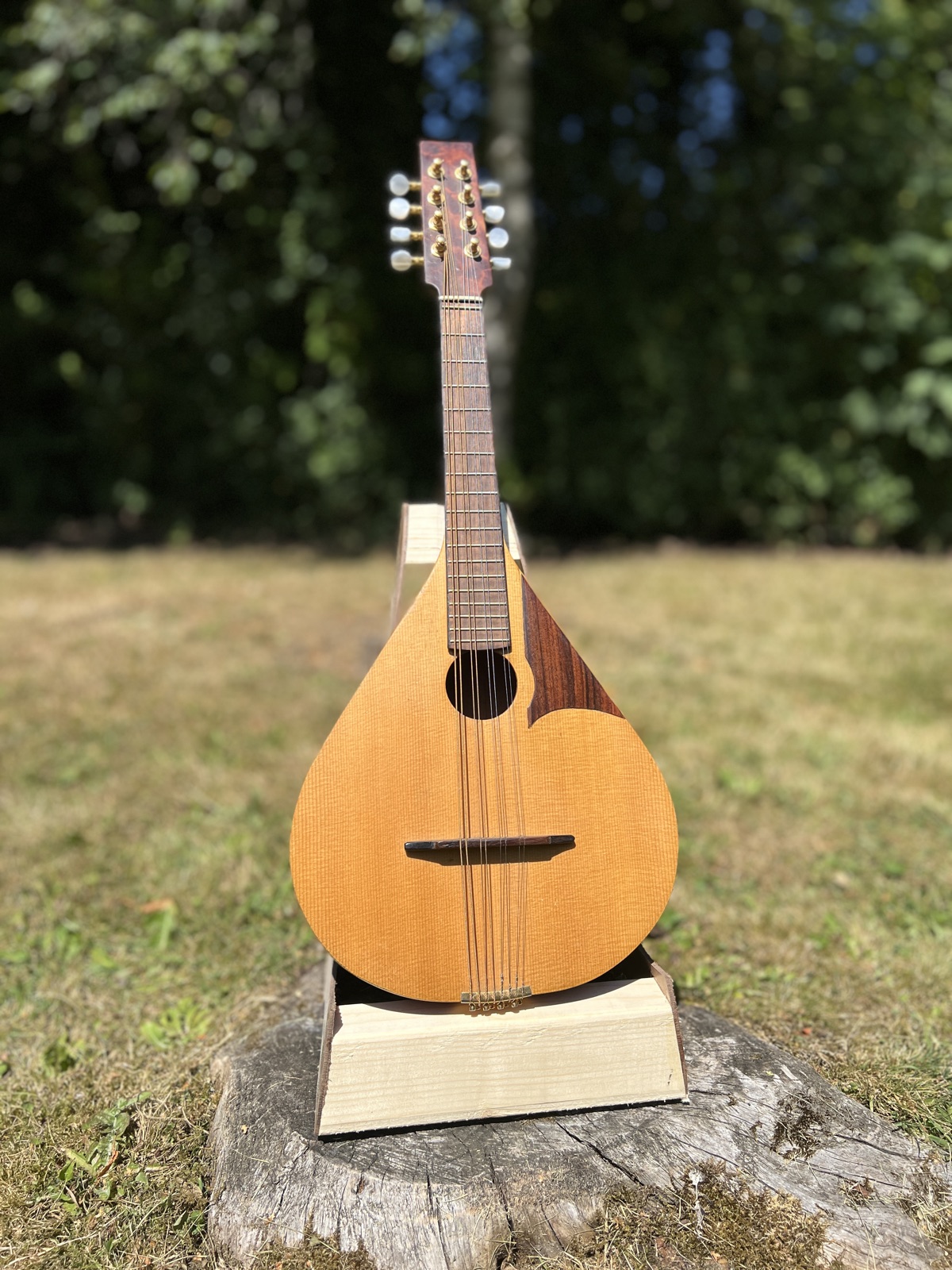
Flat-backed, and quick.
A flat back and sides of Cornish yew, with a soundboard of Sitka spruce — built light, for a warm, woody voice that speaks the moment it is asked.
The fingerboard is rosewood, over a comfortable folk-mandolin neck; fitted with a bone nut and set up with the string gauge and action you play.
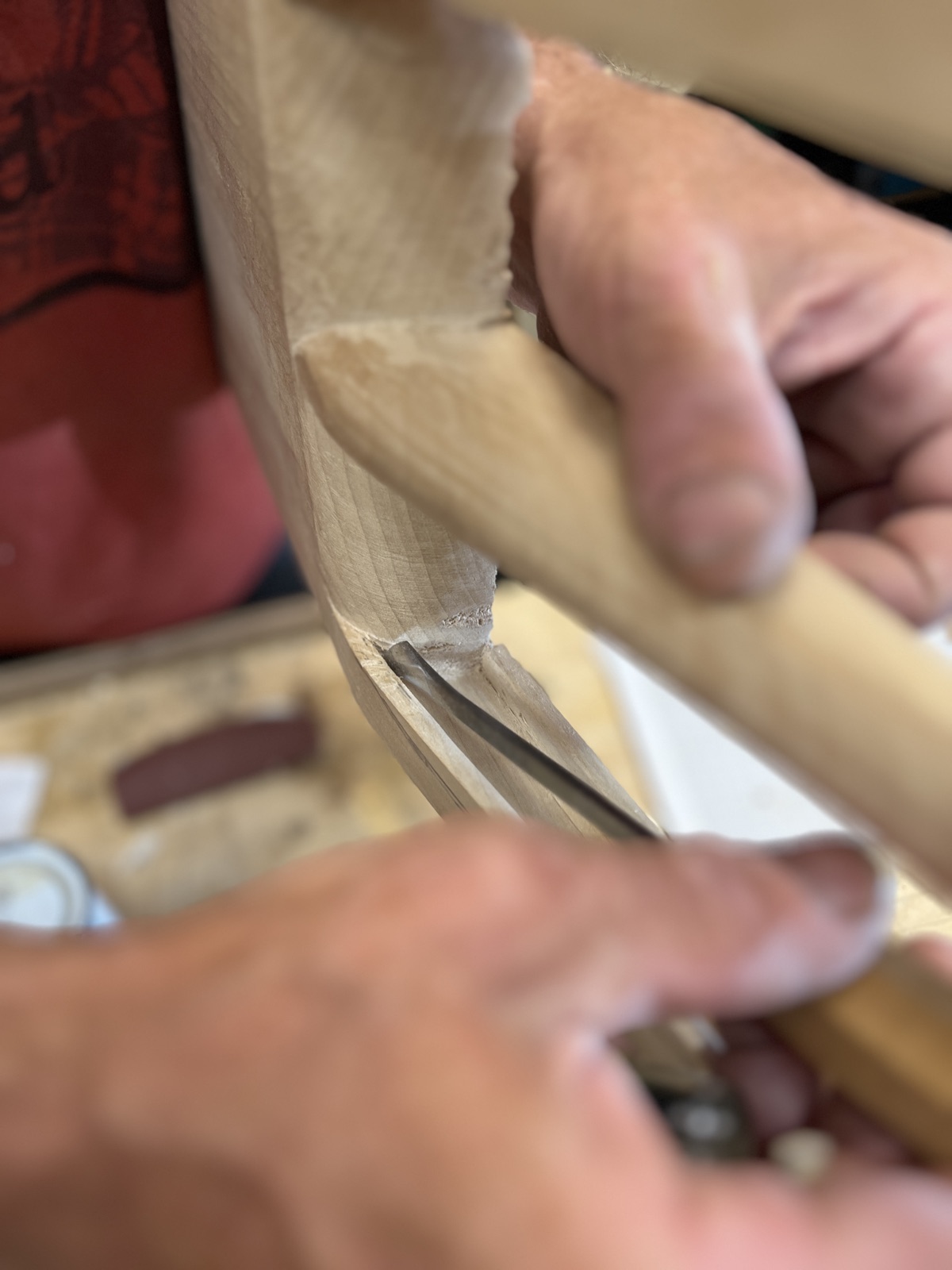
A mandolin is usually three to five months at the bench.
To follow the tune further.
The mandolin lives in the session, among fiddlers and pipers. A few places to find the tunes, the players, and the craft behind the instrument.
- The Session
The great gathering-place of Celtic traditional tunes — where the music a mandolin is built for is written down, argued over, and shared.
- Clera
The society for the traditional instruments of Wales — for the player who carries a mandolin into Welsh gwerin, the folk music, as much as Irish.
- The Musical Instrument Makers Forum
For those curious about the making itself — how a carved top is arched and graduated, and why a soundboard is voiced by ear.