The Crwth — the lyre of the bards
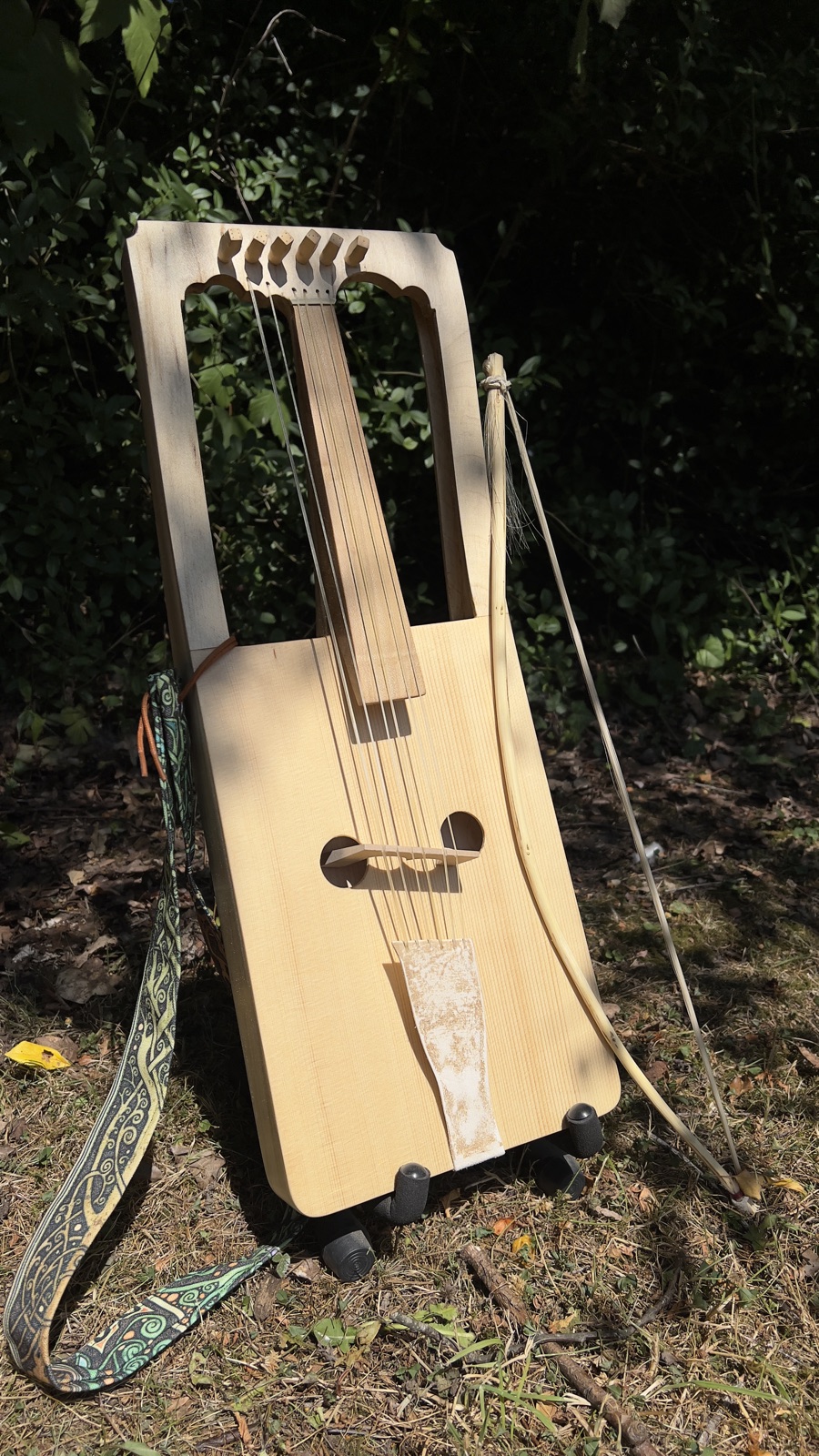
Older than the violin and all but lost, the crwth (say "crooth") is Wales's ancient bowed lyre. For centuries it carried the poetry of the bards — its six strings, four bowed and two drones, sounding beneath the spoken word in the old art of cerdd dant, "the craft of the string."
By around 1800 it had nearly vanished. Today only a handful of makers in the world still build one. Richie is among them, carving each from a single piece of Welsh sycamore — a softwood soundboard, a cherry fingerboard, natural gut strings and a rawhide tailpiece — finished by hand, and delivered with its bow and a fitted case.
A crwth is a rare thing to own: an instrument with a thousand years of Wales in its voice.
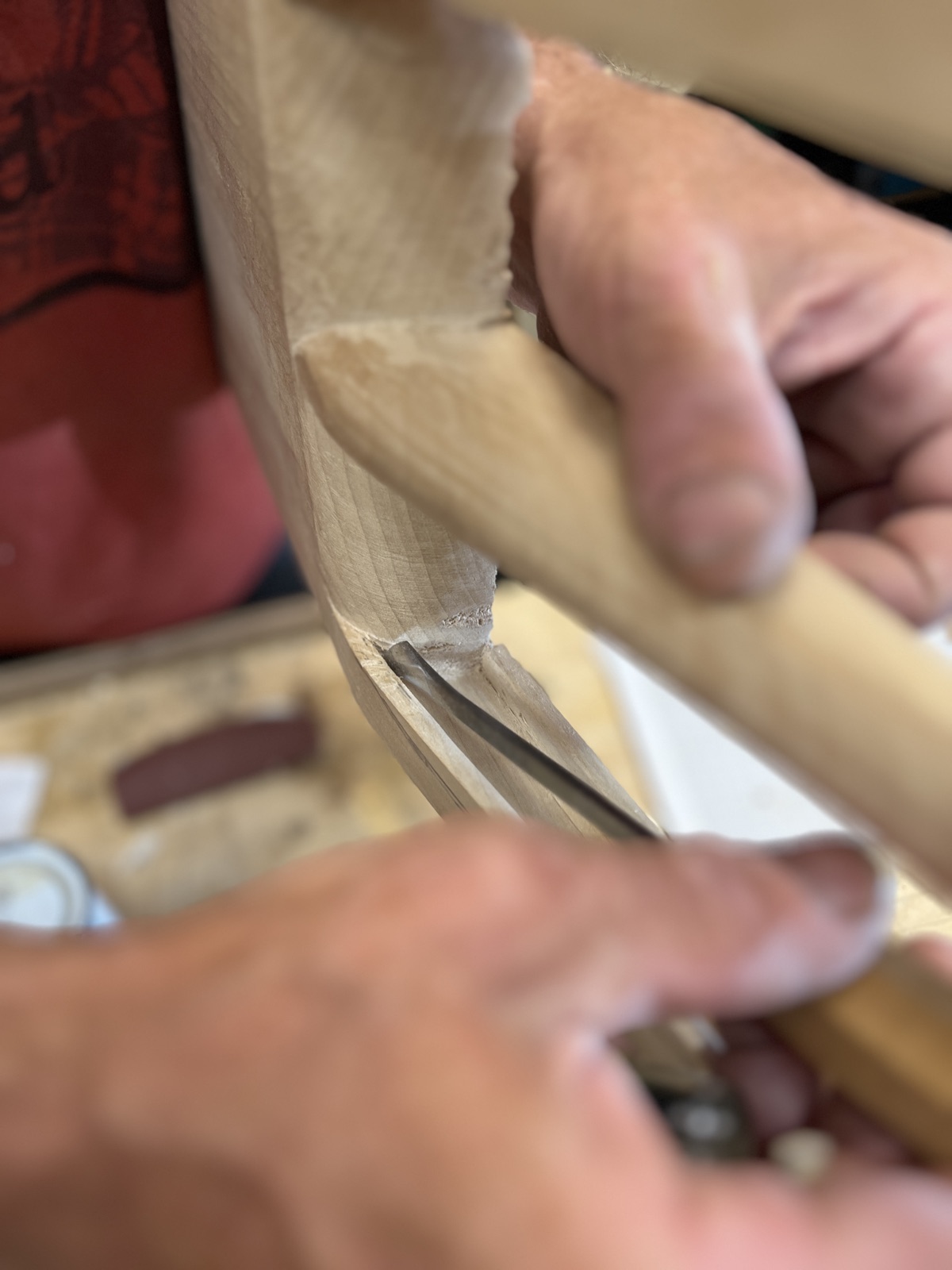
A body from a single block.
The body is carved from a single block of Welsh sycamore — hollowed slowly, tuned by ear as the walls come down to thickness. A softwood soundboard of cedar or spruce is fitted, a cherry fingerboard laid on, boxwood pegs turned for the tuning, and a wooden bridge cut to suit the instrument once it is strung.
Every crwth is set up in gut, finished with oil and wax rather than lacquer, and voiced at the bench before it leaves. It is delivered with its bow, a fitted case, spare strings, and a short handwritten note on care.
A build typically runs eight to twelve months from deposit to delivery.
To follow the crwth further.
A few doors into the older world of the crwth — its history, its living players, and the wood it was carved from.
- Cass Meurig
The foremost living player of the crwth, and author of the standard book on it — the surest voice to hear the instrument in.
- Amgueddfa Cymru — St Fagans
The National Museum of History at St Fagans, where surviving old crwths and pibgorns are kept — the instruments the makers still measure themselves against.
- The crwth, in brief
A plain and useful account of the bowed lyre — its shape, its tuning, and its long silence — for anyone meeting it for the first time.